

In our recent guide to why breakers trip we explained more about the potential causes of a breaker trip and the steps to take in response.
Our latest guide post explores when it’s time to replace a tripping breaker and what you should know about the potential safety concerns associated with aging breakers in modern homes.
How a Breaker Works
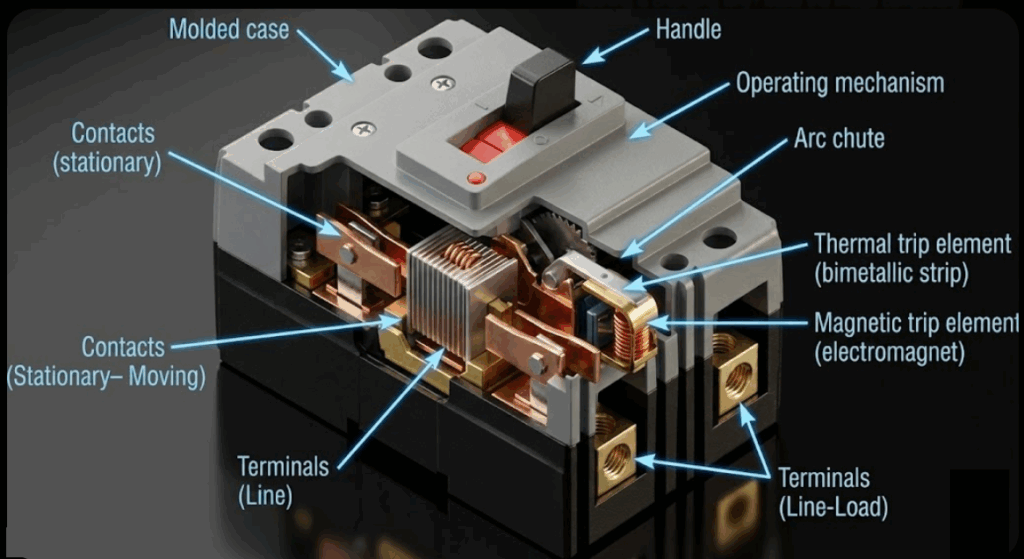
Before learning about when to replace a breaker, it’s important to understand how breakers work and their role in your home’s electrical system.
A circuit breaker continuously monitors the flow of electricity through a home’s electrical system and automatically opens the circuit when it detects unsafe conditions. Inside the breaker panel, electricity enters from the utility service drop, passes through the main breaker, and distributes power to branch circuits through bus bars. Each breaker contains a bimetal strip and an electromagnetic coil that respond to overloads and short circuits.
When too much current flows, the heat-generated flex of the bimetal strip or the magnetic force of the coil trips the internal switch, separating the contacts and stopping current from reaching outlets, lighting circuits, appliances, GFCIs (Ground Fault Circuit Interrupters), AFCIs (Arc Fault Circuit Interrupters), and downstream wiring. This prevents damage to conductors, receptacles, connected devices, and the home’s grounding and bonding system. Modern breakers feature AFCI or GFCIs, adding protection against arc faults and ground faults across branch circuits. Once the fault is cleared, the homeowner or a qualified electrician can reset the breaker, restoring safe power distribution through the service panel, meter, and utility transformer.
Frequent Tripping Without Overload
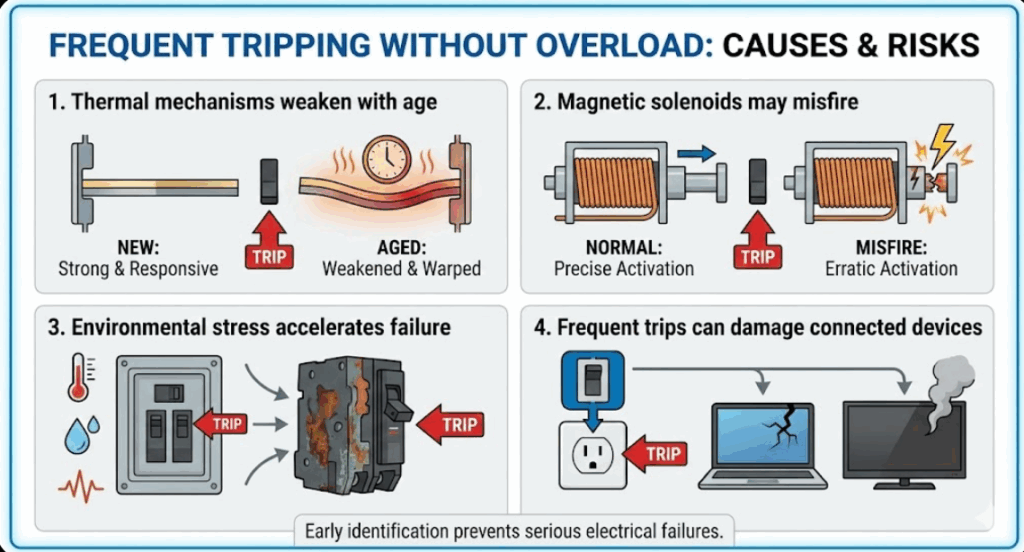
Frequent trips without heavy loads often point to a breaker that is losing its reliability. Even if your appliances or circuits are operating well within the breaker’s rated capacity, internal components like bimetallic strips or magnetic trip mechanisms may wear over time. This wear reduces the breaker’s tolerance to normal currents, causing unnecessary interruptions. Environmental factors such as heat, humidity, and vibration can further exacerbate these problems. Identifying frequent nuisance trips early prevents more serious electrical failures and ensures your system operates safely.
What you should know about frequent tripping breakers that are not overloaded:
- Thermal mechanisms weaken with age
- Magnetic solenoids may misfire
- Environmental stress accelerates failure
- Frequent trips can damage connected devices
Breaker Won’t Reset
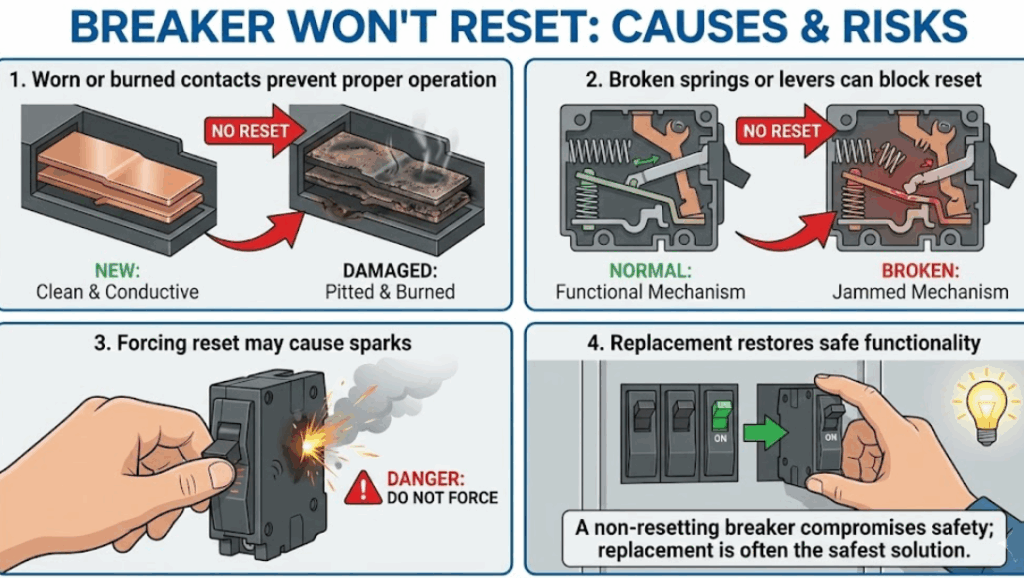
When a breaker refuses to reset, it usually signals internal damage, such as burned contacts, mechanical failures, or a persistent short circuit. Attempting to force a reset can create sparks or worsen existing damage, so it’s critical to identify the root cause.
Breakers rely on precise mechanical and electrical responses to safely restore power; when these mechanisms fail, the breaker cannot function properly. In many cases, replacement is the safest solution. A non-resetting breaker compromises the circuit’s protection and increases risk to both equipment and occupants.
What you need to know about a breaker that won’t reset:
- Worn or burned contacts prevent proper operation
- Broken springs or levers can block reset
- Forcing reset may cause sparks
- Replacement restores safe functionality
Physical Damage or Burning Signs
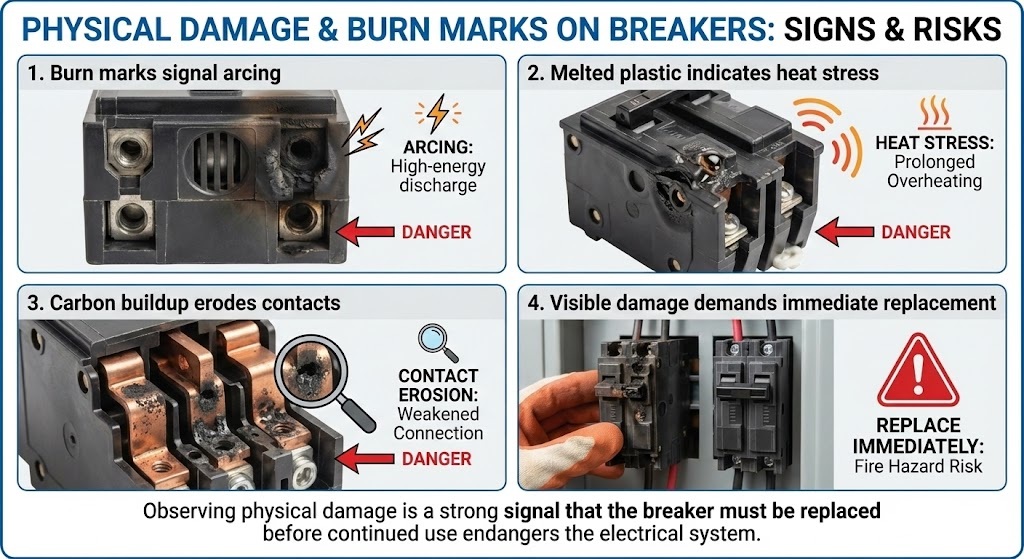
Visible signs like burn marks, melted casing, or discoloration indicate severe stress from overheating or repeated arcing inside the breaker. Such damage reduces the breaker’s ability to safely interrupt electricity and can eventually lead to fire hazards. Arcing can occur during normal trips, but repeated or high-energy arcs create carbon buildup and weaken internal contacts.
Thermal stress can warp or crack the casing, exposing wiring and further compromising safety. Observing physical damage is a strong signal that the breaker must be replaced before continued use endangers the electrical system.
What you need to know about physical damage and burn marks on breakers:
- Burn marks signal arcing
- Melted plastic indicates heat stress
- Carbon buildup erodes contacts
- Visible damage demands immediate replacement
Age and Wear
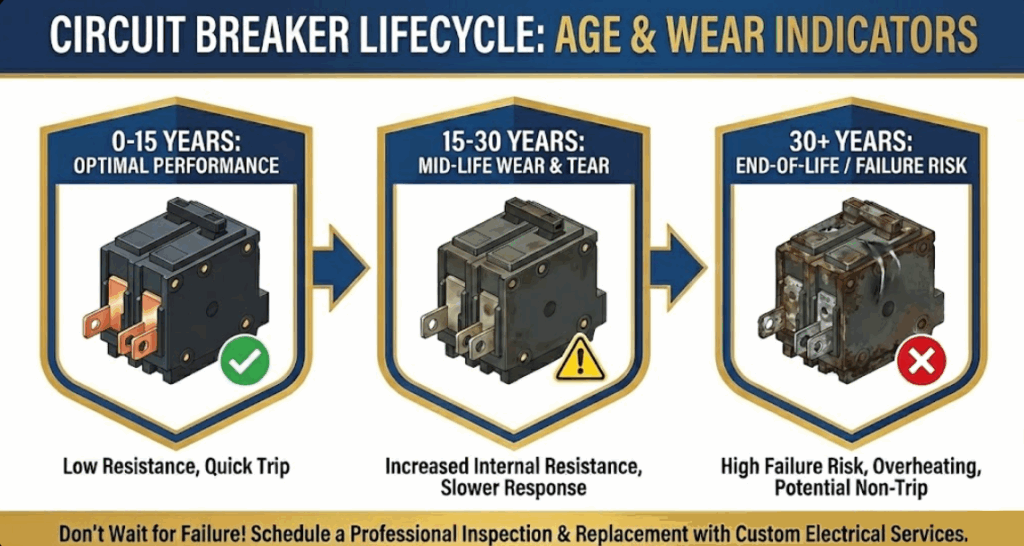
Even if a breaker appears fine externally, age can degrade internal components. Springs lose tension, metal contacts erode, and thermal or magnetic responses drift over time. Older breakers may trip unpredictably or fail to trip during an overload, creating safety hazards.
Homes with aging breakers are less efficient and may cause more frequent outages. Replacing aged breakers improves your electrical system’s reliability, aligns with modern Electrical Code standards, and ensures consistent performance under load. If your home has an older panel, remember to schedule annual inspections with an electrician to detect these subtle signs before they result in electrical failures.
What you need to know about aging and worn breakers:
- Springs lose tension with age
- Contact erosion reduces effectiveness
- Older breakers can misfire
- Replacement improves system reliability
Buzzing or Clicking Sounds
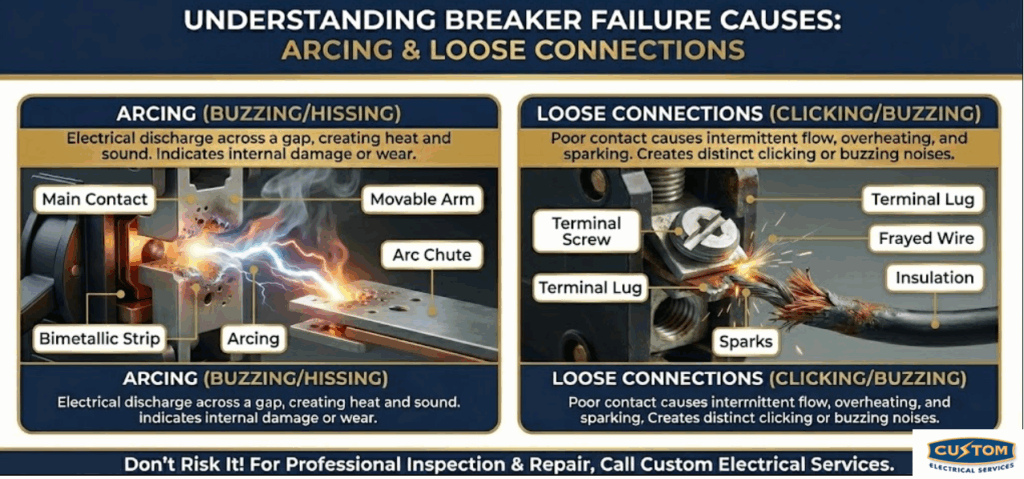
Buzzing or clicking noises coming from a breaker indicate internal instability, often caused by loose contacts or electromagnetic vibrations. Such sounds are more than annoying; they signal potential arcing, overheating, or intermittent connections that could spark fires. Over time, these vibrations may worsen contact wear, accelerating your breaker’s failure. Identifying and replacing noisy breakers ensures both safety and operational stability.
Ignoring these auditory warnings can lead to more severe electrical problems, including damage to appliances or the electrical panel itself.
What you need to know about a buzzing or clicking breaker:
- Loose contacts produce audible arcing
- Electromagnetic vibrations indicate misalignment
- Noise can signal overheating risk
- Timely replacement prevents escalation
Overheating
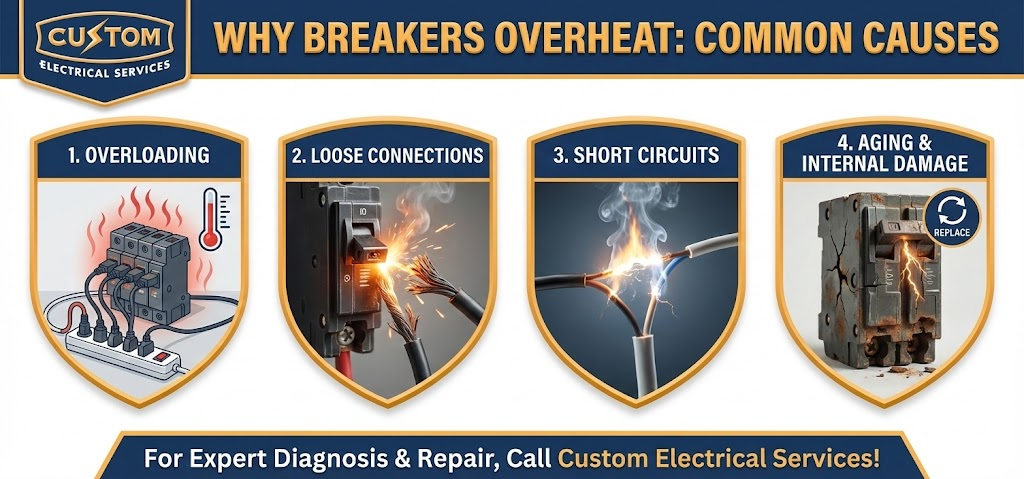
Breakers that feel warm or hot during operation may be stressed or failing. Heat can build from worn contacts, resistive losses, or repeated overcurrent events, even if the circuit isn’t heavily loaded. Persistent overheating accelerates internal wear, reduces breaker lifespan, and can create fire hazards. Checking for abnormal temperature during normal operation helps identify failing breakers early. Replacing overheated breakers restores safe current control and prevents damage to both wiring and appliances.
What you need to know about breaker overheating:
- Heat may result from resistive losses
- Overcurrent accelerates wear
- Persistent warmth is unsafe
- Replacement prevents potential fire hazards
Breaker Trips Only When Certain Devices Are Used
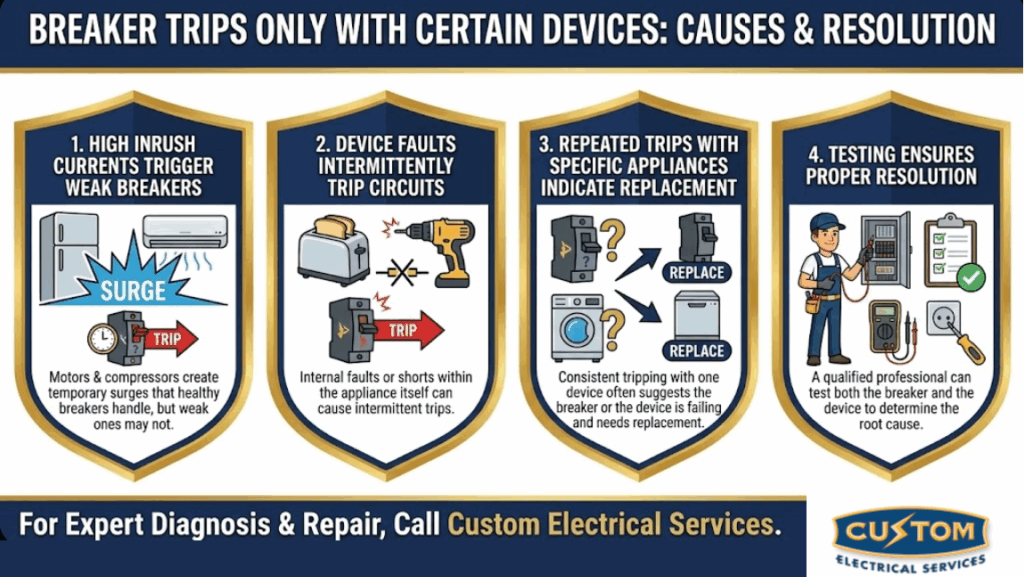
If a breaker trips only when specific devices operate, it may indicate sensitivity or failure, or the appliance may draw excess current. Some devices, like motors or refrigerators, create short-term surges that healthy breakers tolerate. A weakened breaker may misinterpret these surges and trip unnecessarily. Conversely, the appliance itself could have a fault, intermittently causing a short. Understanding the cause helps determine whether the breaker or the device is at fault. Replacing the breaker can restore reliability, especially if other circuits perform normally.
What you need to know about breaker trips and connected devices:
- High inrush currents may trigger weak breakers
- Device faults can intermittently trip circuits
- Repeated trips with specific appliances indicate replacement
- Testing ensures proper resolution
Breaker Feels Loose or Wobbly
Breakers that are loose in the panel can create intermittent connections or arcs even without overload. Over time, panel vibrations or worn internal components can loosen mounting or mechanical parts, compromising safety. Loose breakers may generate heat, cause sparks, or reduce overall electrical reliability.
Securely mounted breakers ensure stable current flow and reduce fire risk. Replacing or properly seating a wobbly breaker is essential to maintain a safe and functional electrical system.
What you need to know about loose or wobbly breakers:
- Panel vibration can loosen breakers
- Internal wear creates intermittent contact
- Loose breakers increase arcing risk
- Replacement restores stability and safety
Replace an Aging Breaker with Custom Electrical Services in Iowa
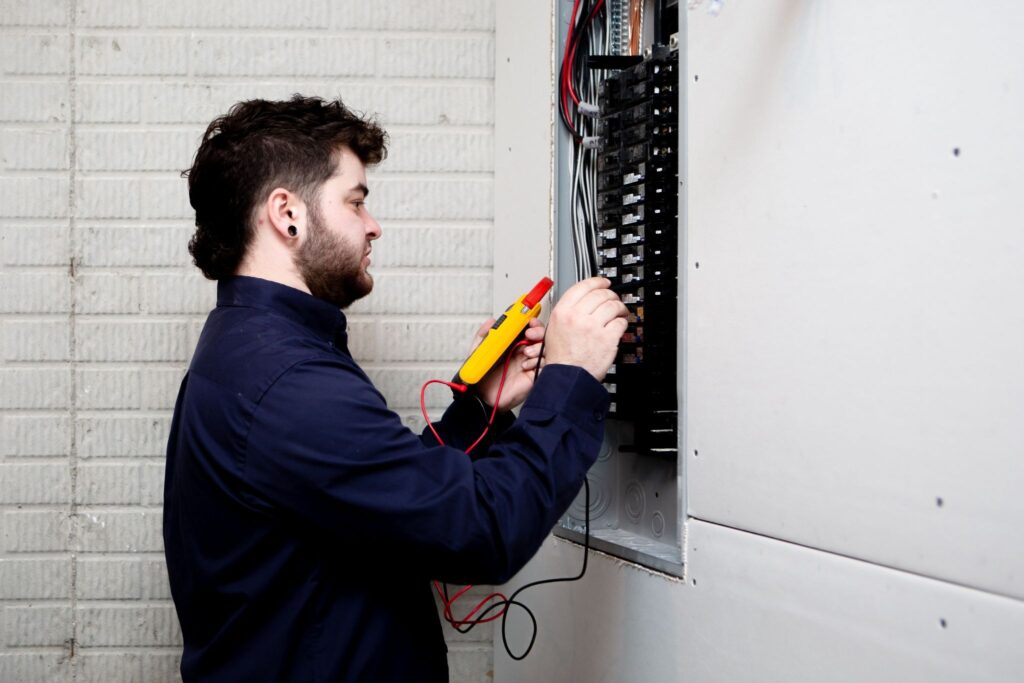
Serving homeowners throughout Central Iowa, including Des Moines, Ankeny, and Ames, as well as Eastern Iowa’s communities of Cedar Rapids and Iowa City, Custom Electrical Services has electricians ready to handle your circuit breaker replacement project.
Schedule your breaker replacement online or call our dispatch team now at (515) 669-3418 to connect with an electrician near you.