
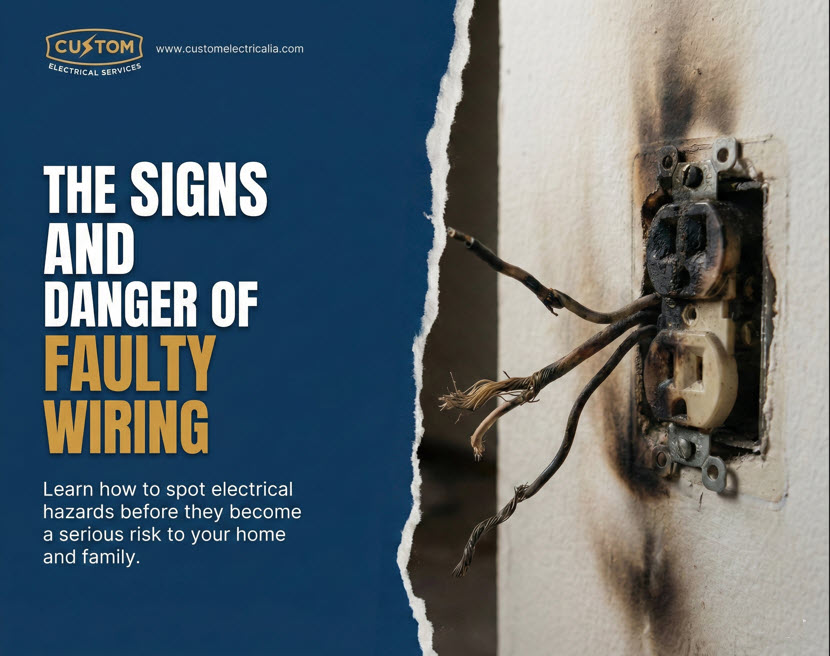
Your home’s electrical system is its nervous system, silently powering everything from your morning coffee to the climate control that keeps you comfortable. But unlike a dripping faucet or a cracked window, electrical problems often remain hidden behind drywall until they become critical hazards.
For Iowa homeowners, recognizing the early warning signs of electrical failure is crucial to ensure safety. At Custom Electrical Services, our team of licensed electricians specializes in diagnosing and correcting these hidden dangers before they damage your property.
Hidden Dangers: The Signs of Faulty Wiring
Most catastrophic electrical failures begin as minor annoyances. Ignoring these subtle cues can lead to expensive repairs or dangerous conditions. If you notice any of the following, it is time to schedule a professional inspection.
1. Flickering or Dimming Lights
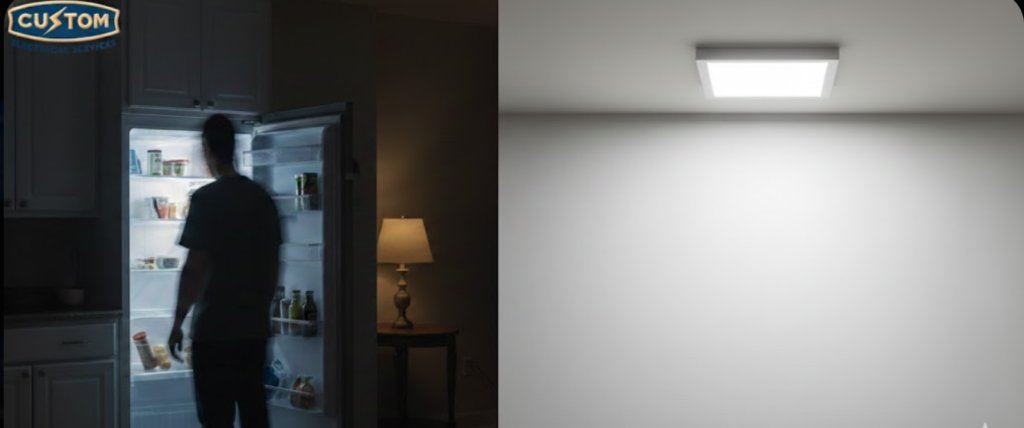
If your lights dim when the refrigerator kicks on or when the vacuum is plugged in, it is a sign of an overloaded circuit. This indicates that your system is struggling to supply adequate voltage, often due to loose wiring or an outdated panel that cannot handle modern appliances.
- Solution: A home rewiring project may be necessary to split heavy loads onto dedicated circuits.
2. Frequently Tripped Breakers
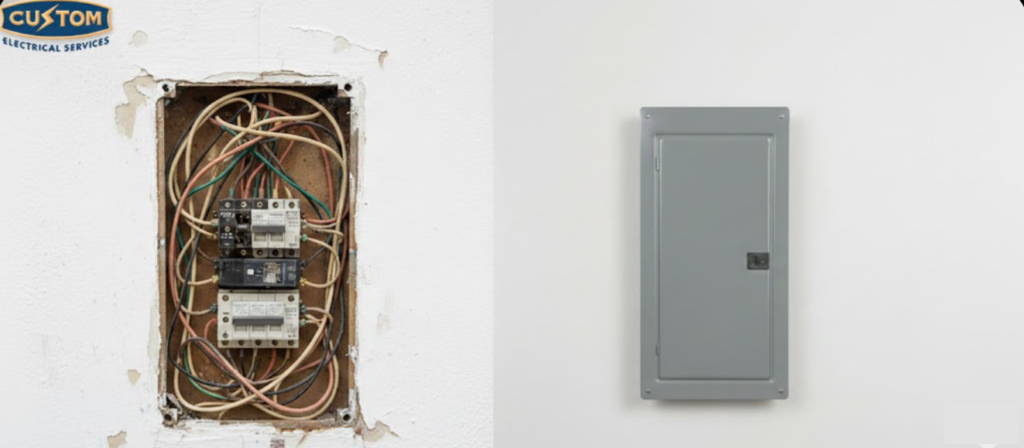
Circuit breakers are designed to be the safety valve for your home, cutting power when a wire gets too hot. However, if you are constantly resetting breakers, your system is telling you that the demand exceeds the capacity.
- Solution: You likely need to upgrade your circuit panel to increase your home’s amperage and distribution capacity.
3. Buzzing Sounds, Scorch Marks, or Burning Odors
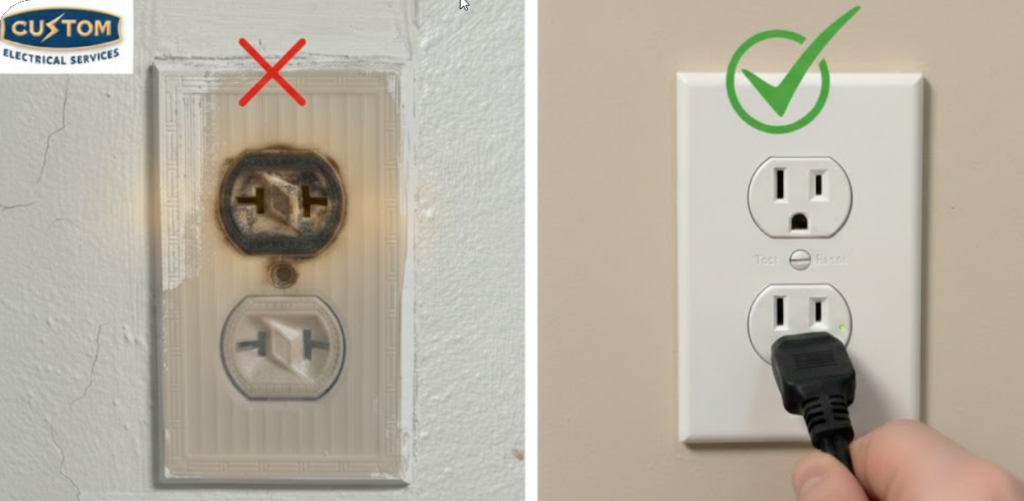
Electricity should be silent and odorless. A buzzing sound from an outlet indicates a loose connection with electricity arcing (jumping) between contacts. A burning smell, often described as “fishy” or like burning plastic, is a critical emergency indicating melting insulation.
- Solution: Immediate electrical repair is required. Turn off the breaker to that room and call a professional.
4. Hot Switch Plates or Outlets
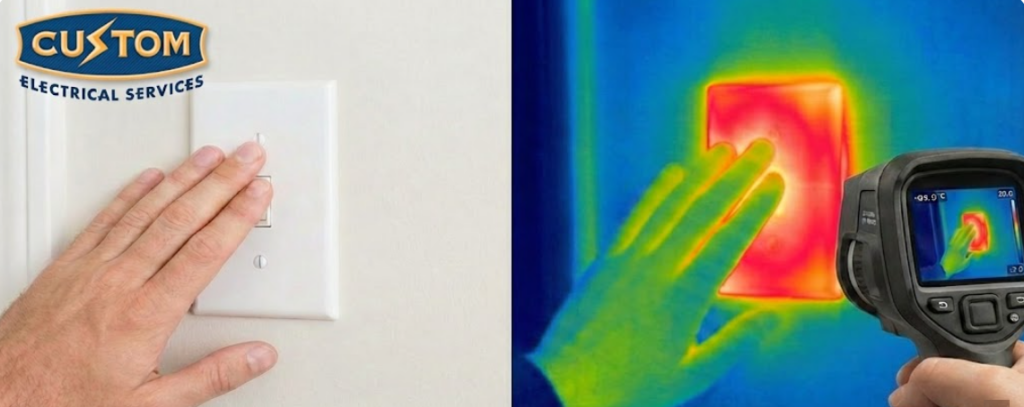
Place your hand lightly on your wall switches or outlets. They should be cool to the touch. Heat indicates that the wire behind the plate is carrying more current than it is rated for, causing resistance and dangerous thermal buildup.
5. Two-Prong Outlets (Ungrounded System)
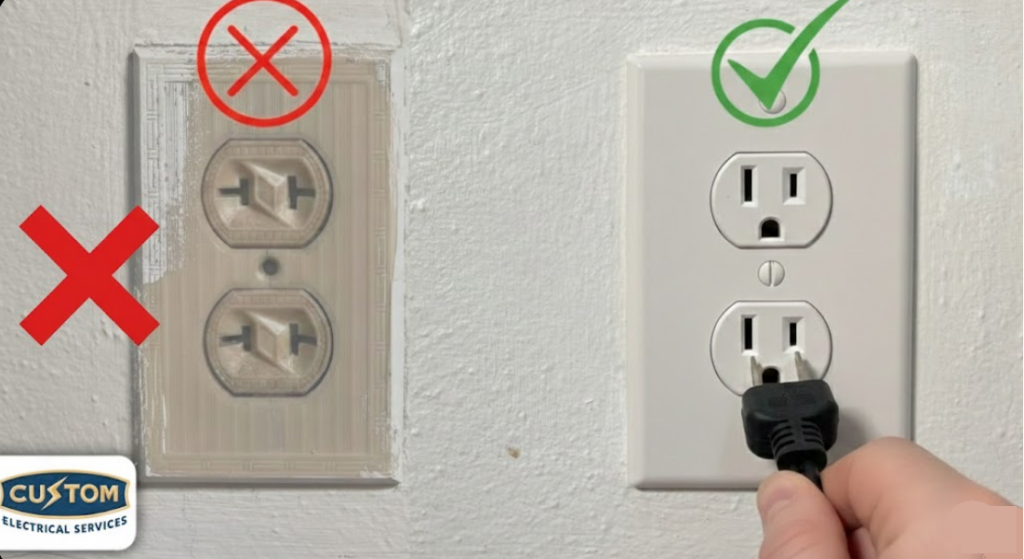
If your home still has two-prong outlets, it likely lacks a ground wire. This means power surges have nowhere to go but into your sensitive electronics or, worse, into you.
- Solution: Upgrading to modern grounded wiring and installing GFCI and AFCI protection is essential for meeting modern safety standards.
The Risks: Why You Cannot Ignore Bad Wiring
Common Wiring Issues in US Homes & Potential Damages
| Wiring Issue | Description | Potential Damage/Risk |
|---|---|---|
| Old/Outdated Wiring | Wiring in homes over 40 years old (often with crumbling insulation or bare wires). | High risk of Fire and electrical shorts due to insulation failure. |
| Aluminum Wiring | Common in homes built in the 1960s-70s; connections can loosen and oxidize over time. | Significant Fire hazard caused by overheating and arcing at connections. |
| Overloaded Extension Cords | Using extension cords as permanent wiring or exceeding their load capacity. | Leading cause of residential Fires; potential for tripping hazards. |
| Lack of GFCIs | Missing Ground Fault Circuit Interrupters in wet areas (kitchens, bathrooms, outdoors). | Increased risk of lethal Electrocution or severe shock. |
| Ungrounded Outlets | Two-prong outlets or improperly polarized plugs that lack a safe path for excess current. | Electrical Shock to users and permanent damage to sensitive electronics/appliances. |
| Lack of AFCIs | Absence of Arc Fault Circuit Interrupters in critical living areas (bedrooms, etc.). | Inability to detect dangerous arcing, leading to electrical Fires. |
Source: Copper Development Association – Top Ten Wiring Hazards
The consequences of delaying electrical repairs extend far beyond a flickering bulb. The data on electrical safety paints a stark picture of the risks involved.
Fire Hazards
Fire resulting from electrical issues is a leading cause of property damage for U.S. families. The National Fire Protection Association (NFPA) reports that electrical failures or malfunctions account for approximately 13% of all home structure fires. These fires are particularly dangerous because they often start inside walls or attics, growing undetected until they breach the living space.
Electrical fires cause an estimated $1.5 billion in direct property damage annually in the United States.
Damage to Appliances
Faulty wiring often delivers inconsistent voltage, spikes, and sags that wreak havoc on modern electronics. “Dirty power” can burn out circuit boards in smart appliances, computers, and HVAC systems, significantly reducing their lifespan.
Insurance and Resale Issues
Many insurance carriers will refuse to write policies for homes with knob-and-tube or aluminum wiring due to the high risk. Furthermore, when you go to sell your home, a failed electrical inspection can kill the deal or force you to lower your asking price.
If you are buying an older property, our team can assist with updating homes with outdated electrical wiring to ensure the property meets NEC code requirements before you move in.
Do You Suspect Faulty Wiring in Your Home? Call Custom Electrical for an Urgent Inspection and Repair
Custom Electrical is Iowa’s wiring leader. Our electricians have decades of experience repairing faulty wiring for homeowners and business owners across Central and Eastern Iowa. Whether you’re experiencing the signs of faulty wiring or you’re looking for reassurance that your wiring is safe, call Custom Electrical now at (515) 669-3418 to speak with a licensed electrician in minutes.
Frequently Asked Questions About Signs of Faulty Wiring
How do I know if my house needs rewiring?
If your home is over 40 years old, has cloth-insulated wiring, knob-and-tube wiring, or ungrounded two-prong outlets, it almost certainly needs a partial or full rewire to meet modern safety codes.
Why does my breaker trip immediately after I reset it?
This indicates a “dead short”, which is a serious condition where a hot wire is touching a neutral wire or ground. Do not try to force the breaker to stay on. Leave it off and call an electrician immediately.
Can I fix a buzzing outlet myself?
No. A buzzing outlet implies arcing, which generates intense heat and can cause fire. This requires a licensed electrician to safely replace the receptacle and inspect the wires for heat damage.
What is the difference between GFCI and AFCI?
GFCI (Ground Fault Circuit Interrupter) protects people from shock by cutting power if it detects a leak to water/ground. AFCI (Arc Fault Circuit Interrupter) protects the home from fire by detecting dangerous arcs in the wiring.
Is aluminum wiring dangerous? Yes, aluminum wiring used in the 1960s and 70s expands and contracts more than copper, leading to loose connections and high fire risk. It should be evaluated and replaced by electricians or retrofitted with special connectors.