

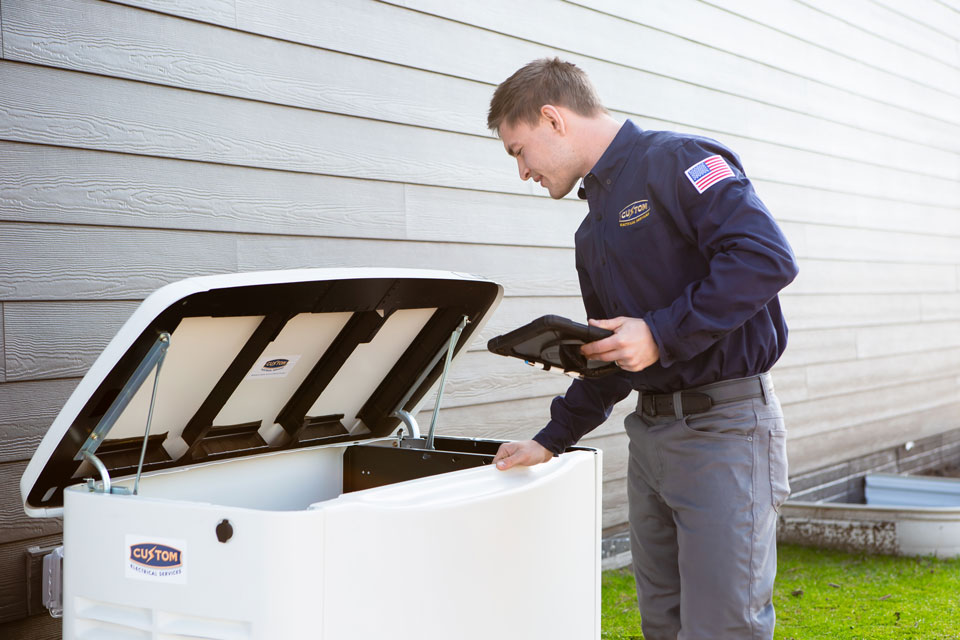
Sizing generators involves determining the amount of power you need to start the generator and keep it running while considering size and fuel type. As authorized installers for Generac and Kohler generators, our electricians have a broad depth of knowledge on the generator sizing process. This post will explain how to size generators and select the right equipment for your application.
Why You Need to Size Generators Properly
Sizing a generator is the best first step in choosing the right equipment to power your home. You need to size generators properly for two reasons:
- Too small of a generator will fail or overheat
Under-sizing the generator for the power demand in the home can cause you to lose generator power unexpectedly as the system overheats and shuts down. Overheating creates unsafe conditions on the property, increasing the risk of an electrical fire.
- Too large of a generator wastes electricity and money
Electricity costs are rising. Save money over the coming years by sizing your electrical equipment to meet the energy demands in your home. An oversized system will cause inefficiency, with thousands of dollars in wasted spending.
How Are Generators Sized?
Manufacturers measure generator capacity in kilowatts (kW), which are measurements of electricity. (1kW = 1,000 watts). The kW rating of the generator relates to the engine’s horsepower and the amount of working power the generator produces. Matching the generator size with the electrical loads of your home equipment can help ensure the generator has the requisite capacity.
You can review the manufacturer’s data plate on each appliance or equipment to determine its starting amperage. To determine the total combined starting wattage of all your appliances, use the formula: Starting Amps x Volts = Watts. You can then divide the watts by 1000 to get the kilowatts.
Sizing Generators by Equipment & Wattage
To answer the question, “How large of a generator does my home require?” review the equipment you’ll be using around the house and that equipment’s wattage. Below are examples of the wattage required to run each specific type of electrical equipment:
- Lighting and small appliances such as power tools: 500-to-3000 watts
- Heating and cooling systems: 3000-to-6000 watts
- Water heaters and larger appliances: 6000-to-10,000 watts
- Electrical car chargers: minimum of 10,000 watts
Sizing Generators by Home Size
Another method of sizing a home generator is by your home’s square footage. The larger your home, the higher the electrical demand. Review the following guidelines and match your home’s square footage to the generator’s capacity to ensure safe backup power.

Starting, Running, and Surge Wattage
In calculating the size of generator you require, you should also consider the equipment’s starting, running, and surge wattage demand. The wattage information is usually stamped on the bottom or back of an appliance or on its nameplate. A furnace’s wattage will be on the manufacturer’s label or specified in your user manual.
The starting wattage for an appliance is generally three times the wattage the device needs to keep it running. Surge wattage is the maximum wattage the equipment will require at times of peak demand.
For example, if your furnace consumes 1000 watts of running power, you can calculate the starting, running, and surge wattage for the furnace with the following calculation
- Running Wattage (R) = 1000 watts
- Starting Wattage (S) = 1000 x 3 = 3000 watts
- Total Wattage (R + S) = 1000 + 3000 = 4000 watts
Note: For optimal performance, select a generator that can handle all your home power demands while running at less than 90% capacity.
Home Generator Sizing FAQ
What are the safety considerations when sizing a generator?
Knowing the generator’s maximum capacity is crucial to home safety. Running the generator at its maximum capacity for more than 30 minutes may cause a loss of power or an electrical fire from overheating. Ask a qualified electrician to help you finalize your choice of generator. Licensed electricians are manufacturer-authorized to work on home generators and will help you select the right accessories and transfer devices for the unit.
What is the Generator’s Power Factor?
The power factor is the ratio between kilowatts (Kh) and kilowatt amps (Kva) taken from the electrical load of the unit. The higher the generator power factor, the more efficiently the equipment transfers power to a connected system.
What is the Generator’s Service Factor?
The service factor relates to the overload capacity of a generator – its capacity to handle a higher horsepower for a set period. A generator with a 10 HP motor might have a service factor of 1.35 and can run at 11.35 HP for a short time.
What is an Automatic Transfer Switch?
An automatic transfer switch is a device that determines when your main power source fails and transfers power to your generator. When the standard power returns, the transfer switch re-connects the home to the source. Speak with a licensed electrician to determine the size and style of transfer switch for your home.
Custom Electrical is Iowa’s Generator Leader
From generator replacement and installation services to generator rental options, Custom Electrical is the leader in Des Moines, Iowa City, Cedar Rapids, and throughout Iowa for generator services. As authorized installers for Generac and Kohler, our electricians train with the latest equipment and have decades of hands-on experience working daily in homes throughout Iowa.
Call our offices today at (515) 669-3418 to speak with an electrician about your generator options.