


You’ve likely spent hours picking out the quartz countertops, the shaker cabinets, and that professional-grade range. It is easy to get lost in the visible design choices, but if you haven’t thought about what’s behind the walls, your dream kitchen could turn into a daily headache of tripped breakers and dark corners.
Modern kitchens consume far more power than those built 20 or even 10 years ago. Between high-wattage air fryers, espresso machines, and smart fridges, the electrical load is significant. This guide covers everything Iowa homeowners need to know about upgrading their kitchen electrical system, from the rough-in stage to installing the final light fixture.
Kitchen Equipment Requiring Dedicated Circuits
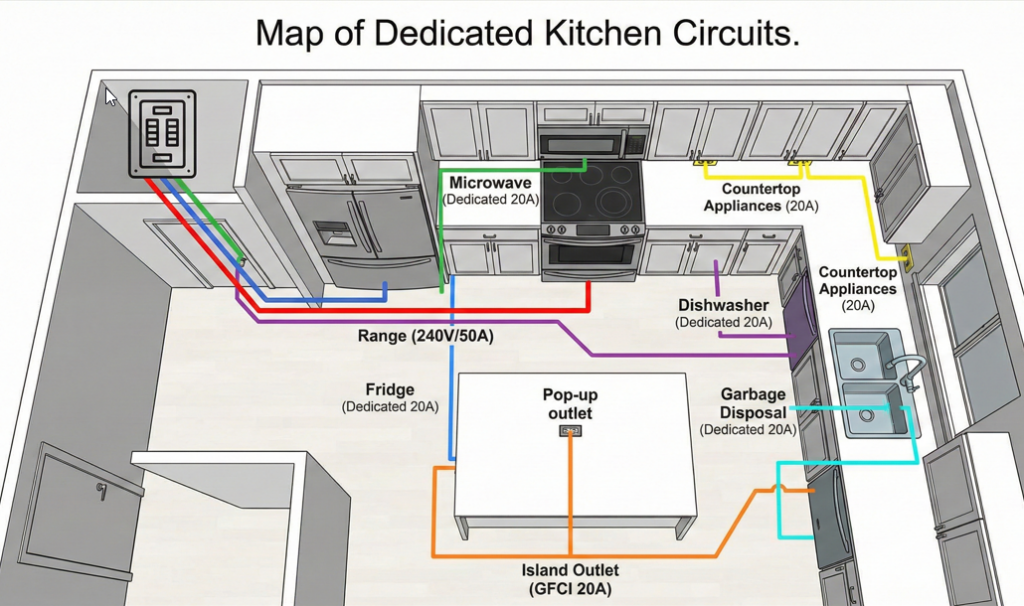
The most common mistake homeowners make during a remodel is underestimating power needs. You simply cannot run a modern kitchen on the existing wiring of a 1980s home. Your electrician will focus on creating specific “zones” of power to handle this load.
According to the National Electrical Code (NEC), your kitchen counter areas must be served by at least two dedicated 20-amp circuits. Think of these as “small appliance” lanes. High-heat appliances, such as toasters and electric kettles, often draw 1500 watts each. If they share a circuit with the lights or fridge, the breaker will trip often. By installing separate circuits, you can run multiple appliances simultaneously without losing power.
Heavy-Duty Appliances
Beyond the countertop outlets, specific appliances need their own private power connection to function safely.
- Refrigerator
Putting your fridge on a dedicated circuit prevents your food from spoiling if a toaster trips a shared breaker elsewhere in the kitchen.
- Microwave & Range Hood
Built-in microwaves draw significant power and often require careful consideration during kitchen renovations.
- Dishwasher & Garbage Disposal
While dishwashers and disposals often share a circuit, they require specific wiring setups to handle the motor loads.
- Electric Range
Electric ranges require a heavy-duty 240-volt outlet, typically rated for 40 or 50 amps of power.
If you’re planning for a duel-fuel range (gas cooktop, electric oven), tell your electrician early. This setup requires a specific 240V outlet placement that is entirely different from a standard gas stove connection.
Make GFCI Protection an Upgrade Priority
Water and electricity are a dangerous combination. Electrical safety protocols in the kitchen are non-negotiable. Any outlet that serves a countertop surface requires GFCI (Ground Fault Circuit Interrupter) protection.
GFCIs detect imbalances in current, like electricity flowing through water or a person, and cut the power in milliseconds.
Kitchen Islands Require Power Outlets
Kitchen islands must have power outlets to prevent the dangerous practice of draping extension cords across walkways. Your electricians can install these on the side of the cabinet or even use “pop-up” outlets recessed into the countertop itself, keeping the surface clean and clear.
Planning Kitchen Lighting
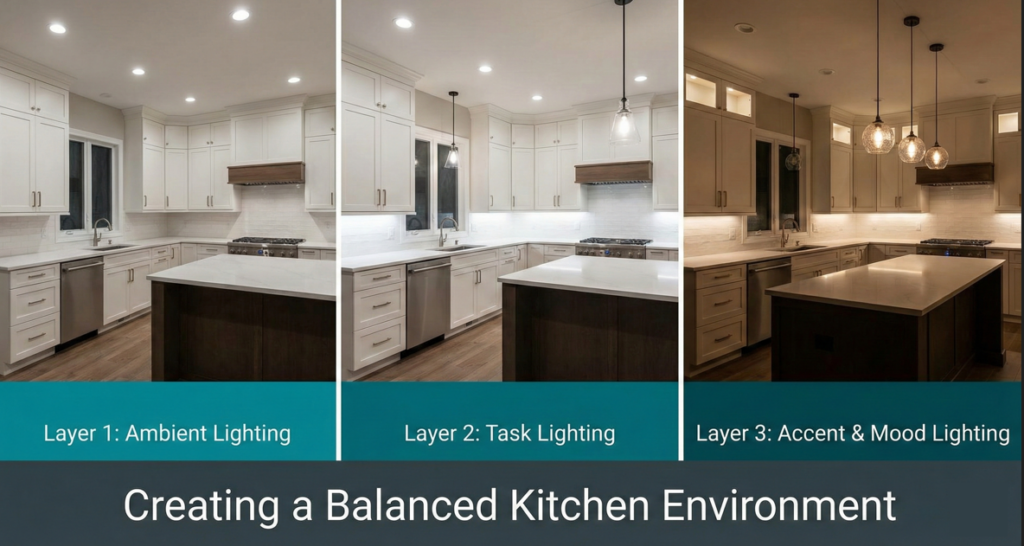
Modern kitchens require three distinct layers of light. Professional electricians can wire separate switches, allowing you to transform room lighting from a bright workspace to a moody dinner setting seamlessly.
Layer 1: Optimal Lighting for Social Occasions
Old kitchens often relied on a single fluorescent box in the center of the room. Modern design uses LED lights spaced evenly to reduce shadows. Professional electricians may recommend 4-6 inch LEDs with a color temperature of 3000K (bright but warm) or 4000K (daylight/clean).
Layer 2: Functional Task Lighting
Task lighting is the ultimate in functional kitchen electrical upgrades. Task lights light the countertop areas while you chop and prep.
Avoid plugging cheap “puck lights” into a wall socket with a visible, dangling cord. Choose modern options such as hardwired LED tape lights hidden behind the cabinet valance. Your electrician can rough-in tape light wiring before the backsplash goes up for the ultimate combination of seamless aesthetics and lighting control.
Layer 3: Creating a Lighting Centerpiece
Pendants over the island serve as the visual centerpiece. Electricians can install a dimmer to allow for brightness at homework time, but dimmed mood lighting during dinner parties.
Consider Aesthetics when Planning Your Kitchen Electrical Upgrade
Don’t ruin your new backsplash with ugly plastic outlets. There are clever ways to deliver power without compromising design.
One popular option is under-cabinet power strips. Instead of cutting holes in your tile, your electrician can install power strips tucked under the upper cabinets. The outlets remain hidden from view and within reach when you need to plug in a mixer.
If you do prefer wall outlets, consider color-matched devices. Rather than standard white, you can match the receptacle color to your tile, with a splash of gray, dark bronze, or matte black to help blend outlets and tiles.
Put 20 Years of Experience to Work for Your Kitchen Remodel with Custom Electrical
Don’t let outdated wiring hold back your kitchen remodel. Whether you need a simple fixture swap or a full “down to the studs” rewire, Custom Electrical Services has the expertise to ensure your kitchen is safe, code-compliant, and beautifully lit. Schedule your free kitchen electrical consultation today by calling Custom Electrical at (515) 669-3418 or book your kitchen electrical service online.
FAQ on Kitchen Electrical Upgrades
When should I call the electrician for a kitchen remodel?
You should reach out before you start demolition. Your electricians need to assess the existing panel and wiring capacity. Electrical upgrades in the kitchen occur in two stages: the “Rough-In” (after framing but before drywall, when wires are run) and the “Trim-Out” (after installing cabinets and backsplash, where outlets and fixtures are installed).
Do I need to upgrade my electrical panel for a new kitchen?
Potentially. If you are adding new heavy appliances such as a double wall oven, induction cooktop, or instant hot water dispenser, and your home has a standard 100-amp panel, you may need a service upgrade to handle the increased load safely.
Can I use my old stove wiring for a new induction cooktop?
Induction cooktops have specific amperage requirements of 40 or 50 amps, while older electric stoves might be on a 30-amp circuit. Always check the specs of your new appliance and share them with your installer.
What is the code for kitchen island outlets?
The current NEC code generally requires at least one outlet installed in the kitchen island to prevent reliance on extension cords. This outlet must be GFCI-protected. Many homeowners opt for USB-integrated outlets here for convenient charging of phones and tablets.