

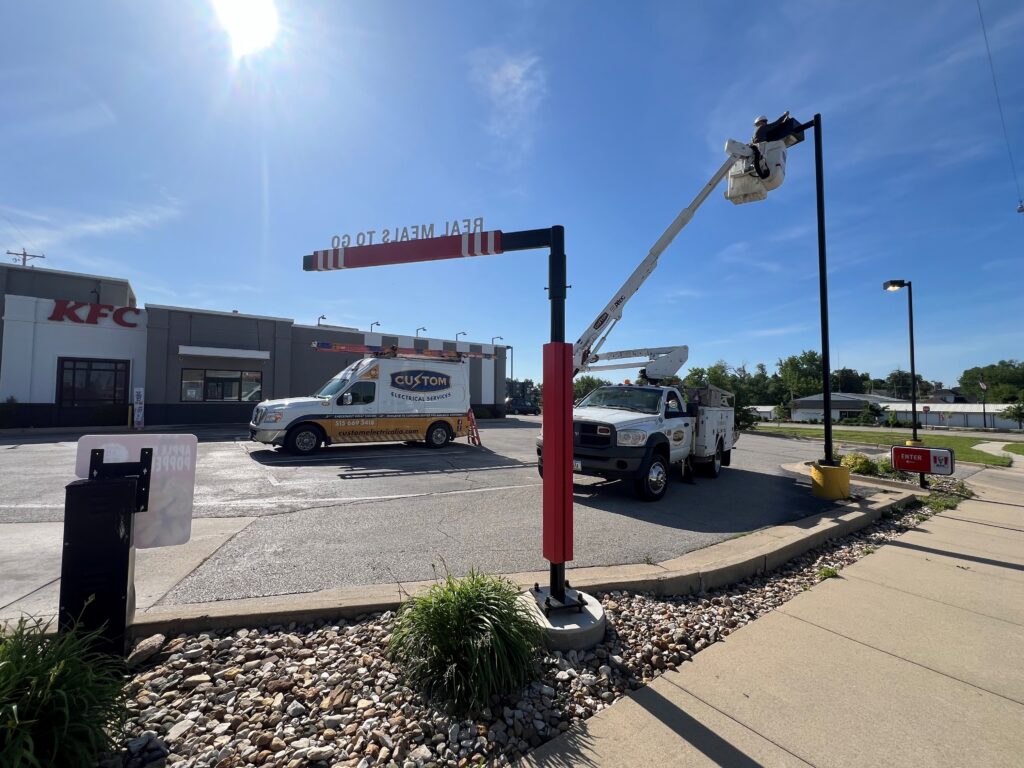
Need help with high exterior lighting? Our expert electricians can repair or replace lights at various heights, including very high ones. We handle wall packs, parking lot lights, pole lights, and more. Our trucks are stocked with electronic ballasts, drivers, and a range of lamps, including high-pressure sodium, metal halide, incandescent, and LED.
Enhance your existing areas with additional lighting to meet the recommended lumens of 20,000 to 30,000 for medium-sized lots and 30,000 to 70,000 for large commercial parking lots. Our parking lot lighting specialists can assess your needs to make your lot safer. Proper parking lot lighting improves safety by reducing theft, assaults, robberies, and other crimes. It also enhances visibility, minimizing the risk of trips, falls, slips, and fender benders.
We have the equipment, including bucket trucks, boom trucks, scissor lifts, and specialized ladders, to quickly restore your parking lot lights.
Don’t risk the safety of your employees or customers. Schedule a visit from our lighting experts today to ensure your Des Moines, Ames, Cedar Rapids, and Iowa City businesses are well-lit!
The Bright Future of LED Lighting: Efficiency and Benefits
In recent years, LED (Light Emitting Diode) lighting has revolutionized the way we illuminate our homes, offices, and public spaces. As we become more conscious of energy consumption and its environmental impact, the efficiency and benefits of LED lighting stand out. In this blog post, we’ll delve into the reasons why LED lighting is the future, exploring its efficiency, cost savings, and environmental advantages.
What Makes LED Lighting So Efficient?
Energy Savings
One of the most significant advantages of LED lighting is its energy efficiency. Traditional incandescent bulbs convert only about 10% of the energy they consume into light, with the remaining 90% wasted as heat. In contrast, LEDs convert approximately 95% of their energy into light, wasting very little energy as heat. This remarkable efficiency means that LEDs use up to 80% less energy than incandescent bulbs.
Longevity
LEDs have an impressive lifespan compared to other lighting options. While incandescent bulbs typically last around 1,000 hours and compact fluorescent lamps (CFLs) last about 8,000 hours, LEDs can last up to 50,000 hours or more. This extended lifespan reduces the frequency of replacements, leading to significant cost savings and less environmental waste.
Reduced Maintenance Costs
Due to their longevity, LEDs require less frequent replacement and maintenance. This is particularly beneficial in commercial and industrial settings, where the cost and effort associated with changing bulbs can be substantial. By switching to LEDs, businesses can save on labor and maintenance costs over time.
Environmental Benefits
Lower Carbon Footprint
LEDs contribute to a lower carbon footprint in multiple ways. First, their energy efficiency means they consume less electricity, which reduces the demand for power plants and, consequently, greenhouse gas emissions. Additionally, LEDs do not contain harmful substances like mercury, which is found in CFLs, making them safer for the environment.
Recycling and Disposal
LEDs are more environmentally friendly when it comes to disposal and recycling. Unlike CFLs, which require special disposal due to their mercury content, LEDs can be safely disposed of with regular household waste. Moreover, many LED components can be recycled, further reducing their environmental impact.
Cost Savings
Lower Energy Bills
The energy efficiency of LEDs translates directly into lower energy bills. For homeowners, this means reduced electricity costs, while businesses can enjoy substantial savings on their operating expenses. Over time, the initial investment in LED lighting pays off through these ongoing savings.
Government Incentives
Many governments and utility companies offer incentives and rebates for switching to LED lighting. These programs can significantly offset the initial cost of LED bulbs and fixtures, making the transition even more cost-effective. It’s worth exploring the available incentives in your area to maximize your savings.
Versatility and Performance
Improved Light Quality
LEDs provide high-quality light with better color rendering and consistency than traditional lighting options. They are available in a variety of color temperatures, allowing you to choose the perfect lighting for any space, whether it’s a warm, cozy glow for your living room or bright, clear light for a workspace.
Design Flexibility
LEDs come in various shapes and sizes, offering unparalleled design flexibility. They can be used in a wide range of applications, from residential lighting to streetlights, and from accent lighting to large-scale commercial installations. LEDs can also be dimmed, providing additional control over lighting levels and ambiance.
Instant Lighting
Unlike some other energy-efficient lighting options, such as CFLs, LEDs turn on instantly at full brightness. There is no warm-up time, making them ideal for situations where immediate illumination is needed, such as in motion-sensor security lights or in environments where lights are frequently switched on and off.
Conclusion
The efficiency, cost savings, and environmental benefits of LED lighting make it a smart choice for anyone looking to upgrade their lighting solutions. As technology continues to advance, LED lighting will only become more efficient and affordable, solidifying its position as the lighting standard of the future. Whether you’re a homeowner, a business owner, or a facilities manager, making the switch to LED lighting is an investment in a brighter, more sustainable future.