

You’ve probably noticed that some rooms, like the bathroom, garage, or kitchen, have slightly different outlets than other rooms in your house. These outlets feature the buttons “TEST” and “RESET” and are known as Ground Fault Circuit Interrupter (GFCI) outlets.
What Are GFCI Outlets?
The main purpose of GFCI outlets is to prevent shocks. The outlet monitors electrical currents for changes. When a stray current is discovered, this is known as a ground fault. When this current is detected going in the wrong direction, GFCI outlets shut down the electricity on that circuit in a fraction of a second. The GFCI outlet can detect current differences as small as 4-5 milliamps and prevent the current from taking an unintended path.
The National Electric Code (NEC) requirements for GFCI receptacles have increased since they were first used in 1968. The first required use was in swimming pools, and the requirements for GFCI applications throughout the home have expanded. Here’s a timeline of NEC requirements for GFCI outlets.
Why are GFCI Outlets Important?
GFCI outlets now form a critical element of home electrical safety. Consider the following benefits:
Rapid electrical fault detection
GFCIs can detect imbalances as small as 4-5 milliamperes between the hot and neutral conductors, indicating potential leakage. This detection occurs within milliseconds, far faster than human nervous system response times, preventing sustained exposure to dangerous current levels.
Prevention of electric shock injuries
By interrupting power before current reaches harmful levels through the human body, GFCIs effectively prevent serious electrical injuries. This protection is particularly valuable in areas where water increases conductivity and lowers skin resistance, such as kitchens and bathrooms.
Protection beyond circuit breakers
While standard circuit breakers only react to overloads and short circuits (typically at 15-20 amperes), GFCIs respond to much smaller current imbalances. This offers protection against electrocution that traditional overcurrent devices would completely miss.
Equipment protection
Beyond human safety, GFCIs help protect sensitive electronic equipment from damage caused by ground faults, potentially extending the lifespan of appliances and reducing replacement costs.
Fire risk reduction.
Ground faults can generate heat at connection points and within wiring, potentially igniting surrounding materials. By detecting and interrupting these faults early, GFCIs significantly decrease electrical fire hazards, particularly in older homes with aging wiring systems.
Code compliance
With GFCIs required by the National Electrical Code in numerous locations throughout modern homes, their proper installation ensures regulatory compliance while demonstrating due diligence in maintaining safety standards, which can impact insurance considerations and property valuations.
Adaptability to existing infrastructure
GFCIs can be incorporated into older electrical systems without requiring complete rewiring, either through receptacle replacement or installing GFCI circuit breakers at the panel. This adaptability makes safety upgrades accessible even in older construction.
Rigorous testing standards oversee the calibration and reliability of GFCIs. For example, UL 943 mandates that units trip within a specific time-current curve. Faster response times are required for higher leakage currents. For instance, at 250 mA, a GFCI must trip within 11 milliseconds, while at the minimum threshold of 6 mA, it has approximately 5.6 seconds to respond.
The economic impact of GFCI implementation has been substantial. Since their widespread adoption, electrocution fatalities in residential settings have decreased by approximately 70%, according to the Electrical Safety Foundation. This reduction translates to thousands of lives saved and countless injuries prevented, rendering GFCIs among the most significant safety innovations in electrical engineering during the past century.
How to Test and Reset Your GFCI Outlet
Step-by-Step Reset Procedure
1. Unplug Connected Devices
Before attempting to reset the GFCI outlet:
- Disconnect all appliances and devices plugged into the tripped outlet
- Unplug devices from any other outlets that may be on the same circuit (these outlets may also have lost power)
- This helps determine if the problem is with the GFCI itself or with a connected device
2. Locate and Identify the Buttons
GFCI outlets have two primary buttons:
- RESET button: Usually red or marked with “RESET” text
- TEST button: Typically black or marked with “TEST” text
What Do the Test and Reset Buttons Look Like?
- The RESET button is often slightly larger and more recessed
- On newer outlets, text and color-coding are clearly visible
- Older outlets may have worn markings that make identification difficult
- Some outlets may have button covers that need to be lifted first
3. Press the RESET Button Properly
To effectively reset the outlet:
- Press the RESET button firmly until you hear a definitive “click” sound
- The button should stay depressed rather than popping back out
- If the button doesn’t stay pushed in, wait 10 seconds and try again
- A successful reset will restore power to the outlet and any downstream outlets
4. Test the Outlet
After resetting:
- Plug in a simple device you know works (like a lamp) to verify power restoration
- If the lamp works, the GFCI outlet has been successfully reset
- If the outlet trips again immediately, there may be a persistent issue
Tips For When Your GFCI Outlet Won’t Reset
- Check the breaker box to see if it was tripped
- Unplug your devices one at a time to correct potential power overloads
- If you’re still having problems, book one of our electricians to come out and identify the problem
Book GFCI Outlet Repair and Replacement with Custom Electrical
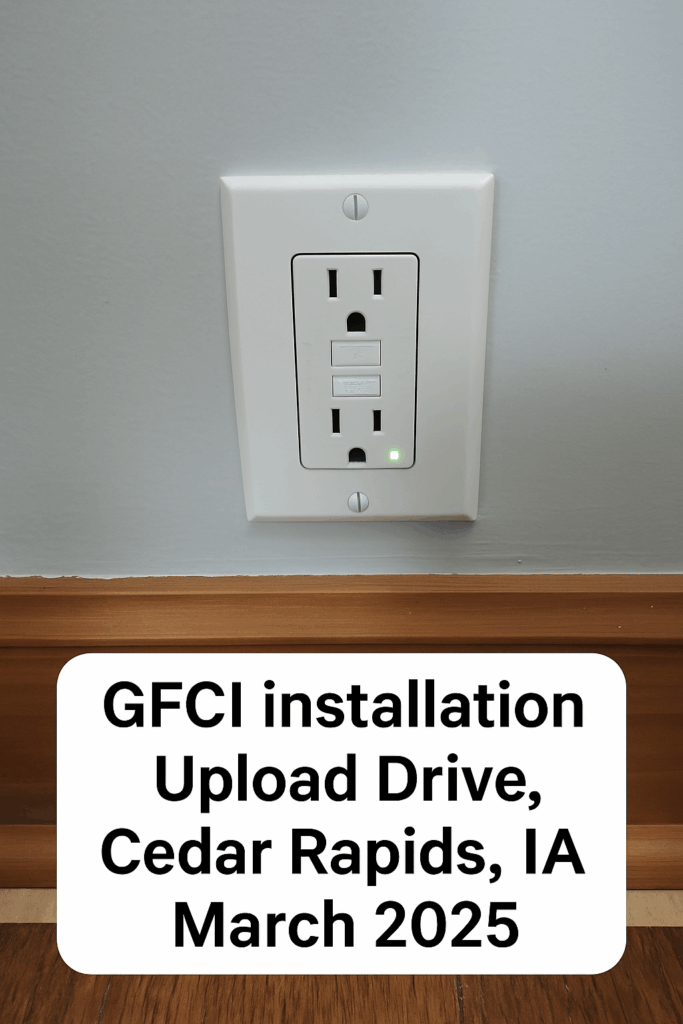
Our licensed electricians install GFCIs across Central and Eastern Iowa, including Des Moines, Cedar Rapids, and Iowa City. If you’re experiencing an issue with a GFCI outlet and require urgent service, call our electricians at 515-669-3418 in Des Moines or 319-313-3313 for our Eastern Iowa electricians in Cedar Rapids, or Iowa City, IA.